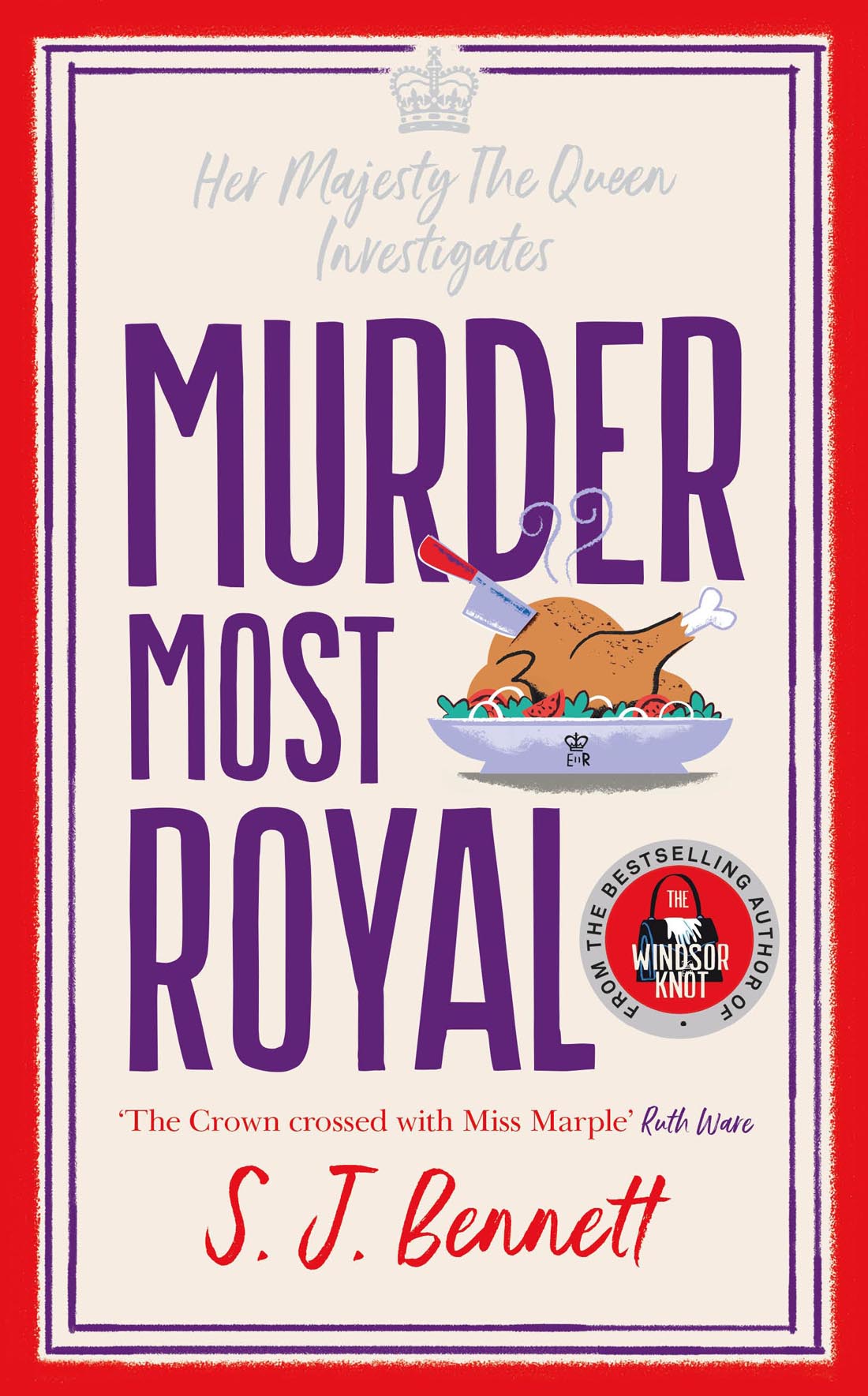
Murder Most Royal
- Автор:S. J. Bennett
- Раздел:Легкое чтение, Детективы
О книге «Murder Most Royal»
Читать «Murder Most Royal» онлайн бесплатно
He told me about it one evening at the festival. He lost the love of his life at twenty-one and never really loved a woman again. He was a true romantic.’
‘Not exactly,’ the lady’s maid scoffed. ‘The way he treated his wives was shocking. My friend used to work for Christina, the third one. He had this system. When he came to get divorced, he suddenly had no money. He was living on thin air, no savings, practically bankrupt, and he couldn’t afford to give them a decent settlement. Then as soon as everything was finalised, back came the nice cars, the trips to Greece to his old house, which was now owned by a friend of his. Convenient.’
Mrs Maddox looked disapproving. ‘I can’t imagine him doing that. He talked so fondly about all his children.’
The lady’s maid shrugged. ‘Easy to do that when you’re not paying for their keep. He told them it was good for them to look after themselves, like he’d had to. Those poor kids. But I agree with you, Mrs Maddox, this isn’t a woman’s crime.’
‘What’s a woman’s crime when it’s at home?’ the butler asked. ‘Some of the nastiest murders in history’ve been done by women.’
The butler thought for a minute. ‘John the Baptist. We saw the play once. Salome did the dance of the seven veils and when she was asked what she wanted, she said John the Baptist’s head. And she got it, on a plate. I remember those veils.’
‘Sure,’ Mr Jackson said from beside Rozie. ‘But I bet it was a man that cut it off and gave it to her. Women tend to be more impulsive. Or more indirect.’
‘Women tend to be the victims,’ the lady’s maid put in gloomily.
‘Actually, they don’t,’ Mr Jackson said. ‘Overall, victims of homicide are eighty per cent men. But those killed by a partner are eighty per cent women, I’ll give you that.’
‘That’s it!’ Mrs Maddox announced, unknowingly mirroring the Queen’s reaction. ‘Enough murder talk on Christmas Day. Now, will somebody make me a negroni and let’s talk about something else?’
After a feverish night, the Queen woke early. The sky beyond her bedroom window was a watercolour wash of pink and lavender, infused from below with frosty light. She sat quietly against her pillows for some time, waiting for her headache to abate and grateful, for once, that there wasn’t room at Sandringham for her personal piper.
Downstairs, the more active members of the family were gathering for a hearty fry-up, ready for the traditional Boxing Day shoot. Some of the women would be joining the men, while others had breakfast in their rooms and took the chance to recover from two days of festivities. Shooting was largely a man’s sport anyway, in the Queen’s experience. At least, it had been in her father’s day.
This morning, the royal party assembling in the gun lobby would be a slimmed-down version of Sandringham in its pomp. Since Philip’s heart operation he travelled as an observer only. William was still keen on the tradition, but of course he wasn’t here. And Harry had developed a sensitivity to blood sports and wasn’t going out with the guns today.
The tide of history was on Harry’s side, she thought. When she and Philip were young it had seemed quite natural to combine a love of field sports and wildlife conservation – necessary, even – and yet that combination had now become a paradox. Charles, aware of this, had given up the hunt and tried to be seen less and less with a shotgun in his hands. The Queen wondered where this loss of tradition would stop. So much of the countryside worked the way it did, with hedgerows and copses as cover for birds, because sportsmen kept it that way. What would happen without keepers and sporting farmers to look after it? By the time little George took over, would it be one big theme park with ‘royalty’ rides, or, God forbid, a massive golf course with sterile putting greens?
At least there was one advantage to Harry’s sudden aversion to blood sports: it meant he could keep her company and help her with the jigsaw. She was looking forward to hearing more about the girlfriend. Her grandson’s general air of bonhomie reminded her somewhat of herself when one of Philip’s letters arrived after the war. It was cheering to see him so happy. She had never doubted the essential, transformative effect of love.
Rozie was woken by the alarm at 7 a.m. Heavy curtains blocked out the sky, and it took her a moment to remember where she was. She needed a pee and a drink of water. She needed to be elsewhere. She probably shouldn’t have brought that second bottle of champagne up to the room last night.
As she sat up slowly to examine the extent of her hangover, a heavy arm threw itself across her from the other side of the bed.
‘I have to,’ she said, remembering the late-night text she had received from Sir Simon. ‘You, do too. You’re the one who set the alarm, remember?’
‘Yes, but it’s so comfortable.
Похожие книги по жанрам

Сотня. Забытый поход
- Ерофей Трофимов
- Легкое чтение, Фантастика
Семь снежинок на ладони
- Светлана Нарватова
- Легкое чтение, Фэнтези

Плюс сайз. Охота на миллионера
- Инга Максимовская
- Легкое чтение, Любовные романы

Не отпущу
- Алиса Верди
- Легкое чтение, Любовные романы

Гримуар темного лорда II (СИ)
- Тимофей Грехов
- Легкое чтение, Фантастика
Ярар. Начало
- Тимофей Грехов
- Легкое чтение, Фантастика